Polycarbonate vs Glass: Light Transmission
The transparent envelope of the greenhouse acts as the primary filter for all incoming solar radiation. Choosing the correct glazing material is a permanent structural decision that governs the facility's baseline light levels and thermal retention capabilities.
Commercial growers operate on the edge of strict margins, where a 1% drop in Photosynthetically Active Radiation (PAR) light transmission can equate directly to a 1% drop in overall crop yield.
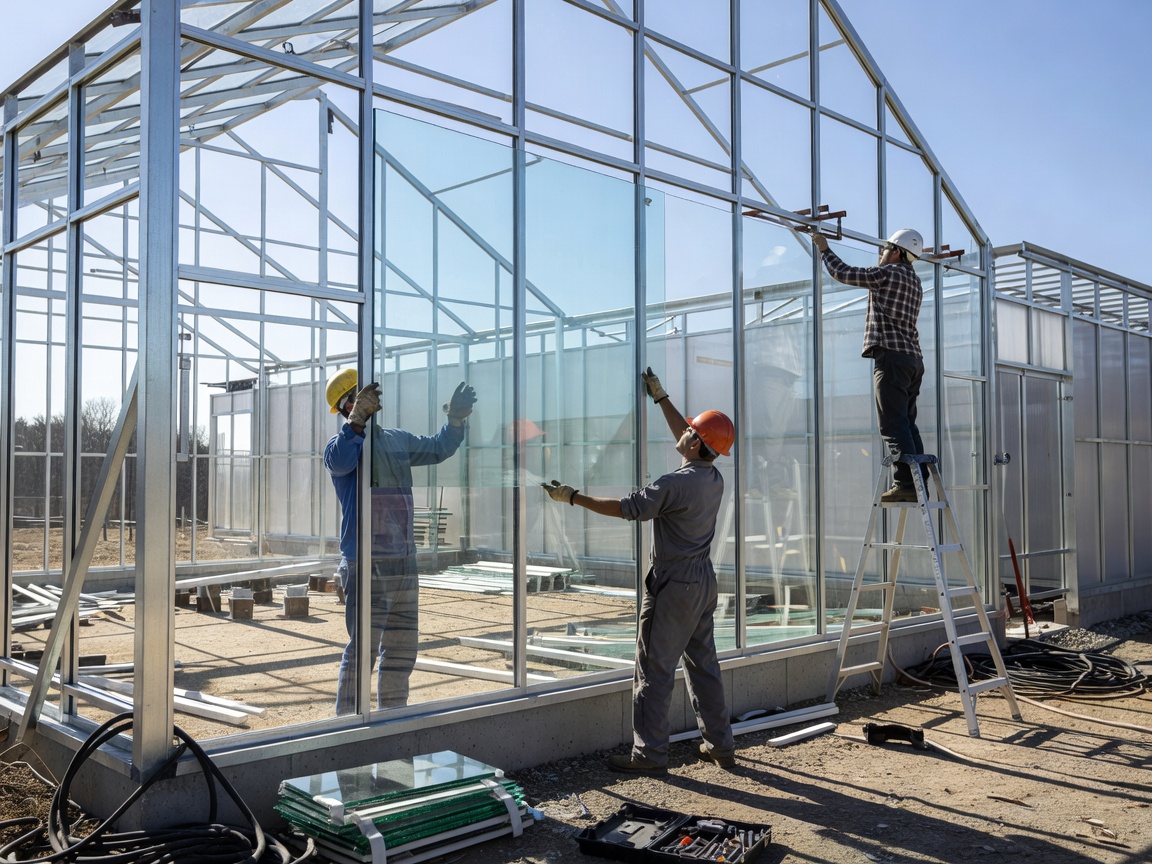
The Case for Tempered Horticultural Glass
Horticultural glass remains the gold standard for light transmission, consistently delivering 89-93% transmission rates over decades of use. Unlike polymers, glass does not degrade under UV exposure and requires minimal chemical maintenance.
Modern applications frequently employ diffuse glass. By acid-etching or structuring the glass surface, incoming light is scattered. This eliminates hard shadows within the crop canopy, ensuring photons penetrate deeper into the lower leaves of dense crops like tomatoes or cucumbers.
"Direct sunlight burns the canopy while starving the roots. Diffuse glass bends the spectrum, turning the entire structure into a glowing ambient machine."
Multi-wall Polycarbonate Structures
When impact resistance, snow loading, and severe thermal insulation are prioritized over raw light transmission, extruded polycarbonate is deployed. Twin-wall and triple-wall panels trap air between the polymer layers, drastically reducing the U-value of the structure.
However, light transmission suffers, often starting at 80% and degrading over a 10-15 year lifespan due to micro-abrasions and UV yellowing. In high-latitude installations, the thermal savings often offset the loss of natural light, relying on supplemental LED arrays to bridge the biological gap.