Energy Efficiency: The True ROI
The modern greenhouse is an energy-intensive industrial facility. The cost of heating, cooling, and illuminating massive acreage defines the baseline cost of production. Mastering energy efficiency is no longer an environmental initiative; it is an absolute commercial imperative.
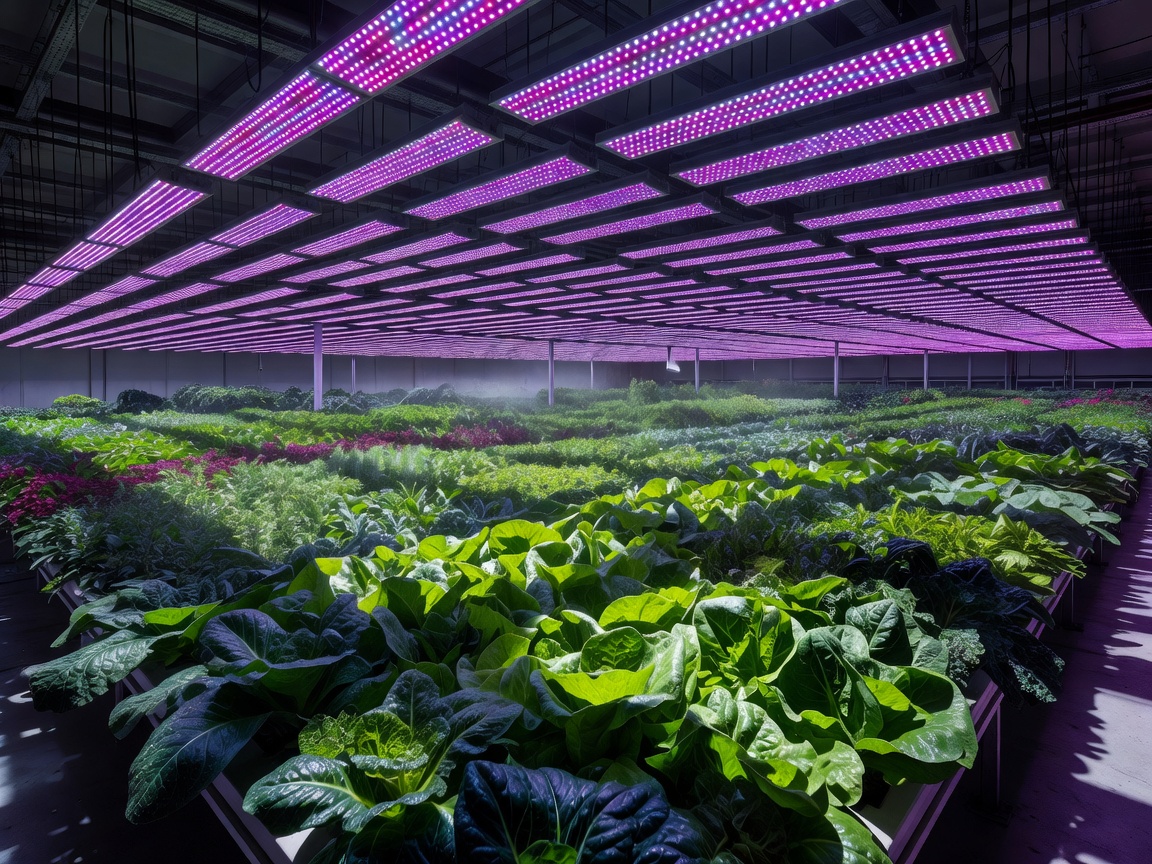
The Transition to Full LED
For decades, High-Pressure Sodium (HPS) fixtures dominated the industry. They delivered intense light, but also intense radiant heat. Operators relied on this heat as a byproduct to warm the facility. The shift to LED arrays represents a total decoupling of light and heat.
LEDs provide highly targeted, tunable spectrums with negligible radiant heat. While this slashes the electrical lighting load by up to 40%, it requires a fundamental redesign of the heating infrastructure. Without the ambient heat of HPS lamps, under-bench hydronic pipe heating must compensate during the darkest winter months.
"True efficiency is found in the closed loop. Every joule of energy introduced into the system must perform multiple tasks before it is permitted to escape."
Cogeneration (CHP) Systems
Large-scale operators frequently install Combined Heat and Power (CHP) units. These natural gas engines generate electricity on-site to run the LED arrays and pumps. The massive heat exhaust from the engine is captured and stored in million-gallon insulated buffer tanks for nighttime greenhouse heating.
Furthermore, the CO2 exhaust from combustion is scrubbed clean and pumped directly into the greenhouse, elevating atmospheric carbon levels to 1,000 ppm. This artificially stimulates photosynthesis, completing the cycle where waste is weaponized for yield.